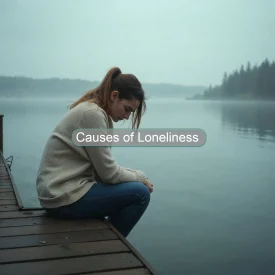
Have you ever been at a party, in a busy workplace, or standing in a bustling street — surrounded by people, yet still felt completely alone? That’s what it means to be lonely in a crowd. It’s when your body is with others, but your mind and feelings feel disconnected.
You know what? You’re not alone in this feeling, and there are clear ways to understand and cope with it. Let’s break down what it means, why it happens, and how you can move toward real connection.
I remember noticing this feeling myself at a friend’s birthday party. The room was full of laughter, chatter, and music — yet I felt strangely invisible, like I wasn’t really part of it. That moment made me realize that being surrounded by people doesn’t always mean you feel connected.
Key Takeaways
- Lonely in a crowd means feeling emotionally disconnected despite being around others.
- The paradox comes from lacking meaningful connection, not physical presence.
- Both internal (self-esteem, anxiety) and external (superficial interactions, cultural gaps) causes play a role.
- Loneliness in crowds can affect mental and physical health if ignored.
- Shifting your mindset, seeking meaningful bonds, and professional support can help you overcome it.
What Does “Lonely in a Crowd” Really Mean?
Before we explore the deeper causes, it helps to first understand what this phrase actually means and why it feels so confusing.
Definition of the phrase
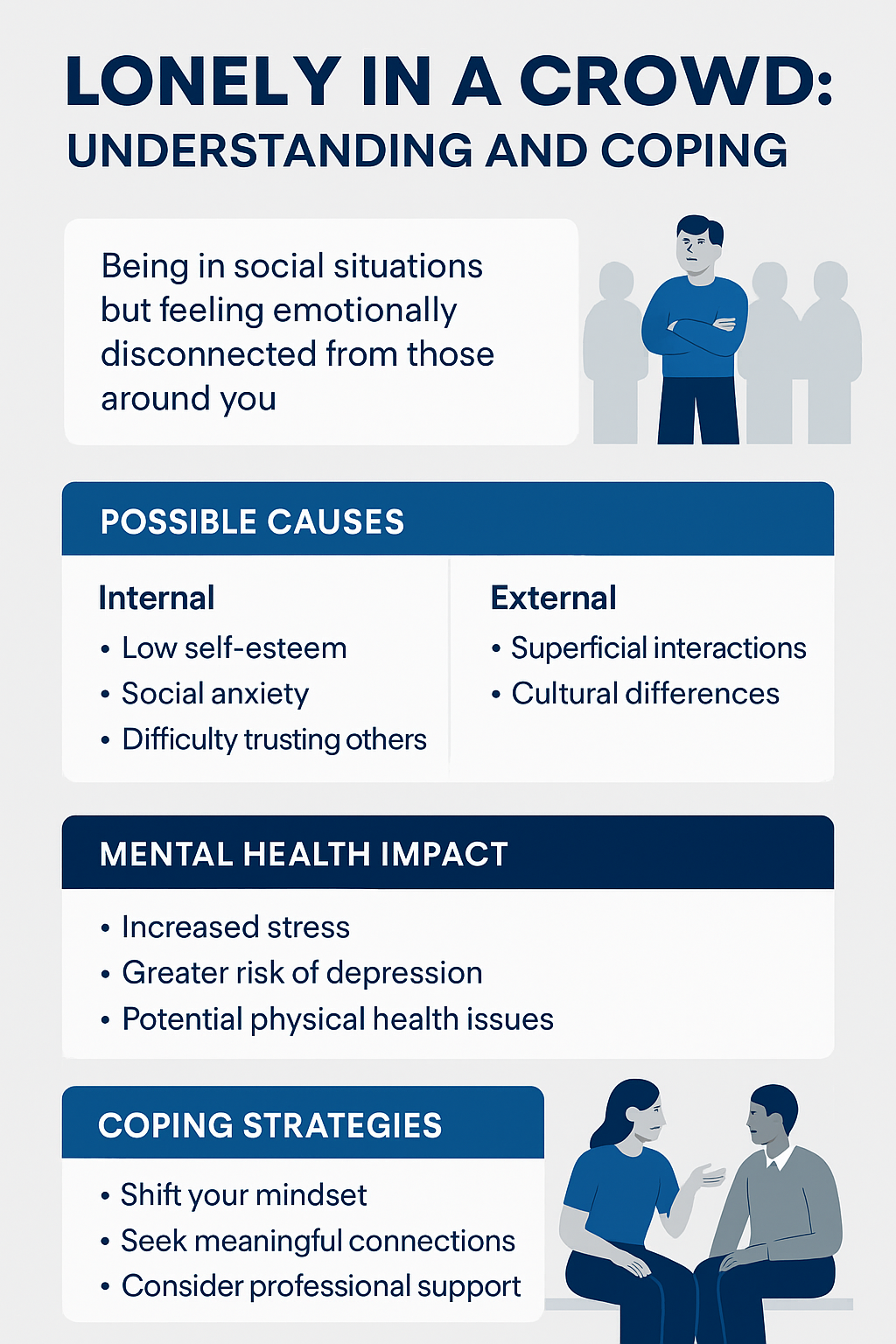
“Lonely in a crowd” describes the experience of emotional isolation despite being surrounded by people. You can be in a busy place, like a party, workplace, or street, yet still feel disconnected from those around you.
Experts explain that loneliness isn’t about physical presence but about how you perceive your relationships. The Australian Psychological Society defines loneliness as “a negative feeling that a person can experience when their social relations are not the way they would like.”
Similarly, research from the Campaign to End Loneliness highlights that the core of loneliness lies in the discrepancy between desired and actual connection, which explains why it can strike even in the middle of a crowd.
Globally, approximately 23% of people say they felt lonely “a lot of the day yesterday.” Recent loneliness facts highlight how widespread and impactful this feeling is across different groups of people.
This shows that for roughly one in every four people, loneliness is more than occasional — even recent, transient social contact may not prevent it.
To explore what loneliness really means and how it affects people, check out our full explanation of loneliness meaning.
Why You Can Feel Lonely Even When Others Are Near
It feels confusing because we usually expect that being around people should make us feel less lonely. However, real connection isn’t about the number of people nearby; it’s about the quality of the relationships.
Simply being in a crowd doesn’t guarantee you will feel seen, heard, or understood. Without meaningful interaction, the sense of loneliness can remain or even grow, making the feeling of being “lonely in a crowd” possible.
The Psychology Behind Feeling Lonely in a Crowd

To understand this feeling, we need to look at the psychology of human connection, belonging, and identity.
Human need for meaningful connection
Humans thrive on emotional bonds, empathy, and shared understanding. We feel happiest and safest when we connect deeply with others who truly get us.
The difference between solitude, loneliness, and social isolation
Solitude is choosing to be alone sometimes, which can feel peaceful. Loneliness is feeling sad about not having enough connections. Social isolation means having little or no contact with others, which can be harmful.
How belonging and identity shape our sense of connection
When you don’t feel like you fit in or belong with a group, loneliness can grow even in a crowd. Our sense of who we are affects how close we feel to others around us.
Causes of Feeling Lonely in a Crowd
Loneliness in crowds can stem from both internal struggles and external circumstances.
Internal Causes
- Low self-esteem can make it hard to feel worthy of connection.
- Anxiety or social fear can create barriers to bonding with others.
- Difficulty trusting people or opening up can deepen feelings of being alone.
External Causes
- Shallow or surface-level interactions don’t satisfy deeper emotional needs.
- Cultural differences or feeling like you don’t fit in can isolate you even in groups.
- Social environments that lack inclusivity or warmth can increase loneliness.
Various personal and social factors can cause loneliness; for a deeper look, visit our detailed article on causes of loneliness.
Signs You Might Be Lonely in a Crowd

Loneliness doesn’t always announce itself clearly. These emotional, behavioral, and physical signs can reveal it.
- Emotional signs: sadness, emptiness, or invisibility.
- Behavioral signs: withdrawing, masking emotions, or pretending to fit in.
- Physical responses: stress, fatigue, or discomfort.
If you want to learn more about common symptoms and how loneliness affects your mind and body, see our guide on loneliness symptoms .
The Impact of Crowd Loneliness on Mental Health

Feeling lonely in a crowd isn’t just uncomfortable — it can affect both mental and physical well-being.
Links to depression and anxiety
Persistent loneliness in crowded settings often leads to intensified feelings of sadness and stress. This prolonged emotional isolation can trigger or worsen symptoms of depression and anxiety, making social interactions feel overwhelming rather than comforting.
Recognizing these links is important for addressing mental health challenges early. For readers interested in understanding how loneliness differs from depression and their key overlaps, see our detailed guide on loneliness vs depression.
Effects on stress and physical well-being
Experiencing loneliness even when surrounded by people can increase stress hormone levels, which negatively impact overall health.
Crowd loneliness may disrupt sleep patterns, cause fatigue, and lower the body's immunity, leaving individuals more vulnerable to illnesses. Managing feelings of disconnection is vital for maintaining both mental and physical well-being.
Long-term risks of chronic loneliness
If feelings of loneliness in social environments remain unaddressed, they can contribute to serious long-term health risks such as persistent depression and heart disease.
Chronic loneliness places stress on the cardiovascular system and impairs emotional resilience. Early intervention and coping strategies can reduce these risks and promote healthier social engagement.
Situations Where People Often Feel Lonely in Crowds

Certain social environments make loneliness more likely, even when surrounded by others.
- Parties and social gatherings → Lots of people, but little connection.
At parties, there are many people, but the talk often stays on the surface. This can make someone feel alone even in a busy room. Trying to seem social can make the loneliness feel stronger when real connections are missing.
- Workplaces and professional events → Near coworkers but still alone.
At work, people may be close but feel far apart emotionally. Casual chats may be rare, and competition can stop friendships from growing. This can leave people feeling lonely and stressed.
- Schools, universities, or campuses → Groups form fast, some get left out.
At school or college, friends form in groups quickly. Some people may find it hard to join in, which can make them feel lonely even when many others are around. Feeling left out can hurt both mood and focus.
- Public spaces like concerts, malls, or commuting → Close to others but not connected.
In busy places like concerts or buses, people are near each other but don’t really connect. No eye contact or talking can make someone feel very alone. Being close in body but far in feelings can be tough to handle.
Coping Strategies: How to Feel Less Lonely in a Crowd

While loneliness in crowds can feel overwhelming, there are clear steps you can take to cope and reconnect.
Mindset Shifts
Shifting how you think about social connection can reduce loneliness.
For example, try focusing your attention on something positive around you or practice self-compassion instead of judgment. Changing your perspective can help lessen feelings of isolation in busy settings.
Practical Steps
Small, intentional actions can help build stronger relationships. This might include starting a simple conversation, making eye contact, or joining a group activity.
These small efforts can create opportunities for real connection and reduce feelings of being alone.
Digital Companions and AI Girlfriends
For those who struggle to find connection, an AI girlfriend offers friendly, virtual companionship anytime. These digital partners provide emotional support and can help ease feelings of loneliness.
To learn more, see our guide on What is an AI girlfriend. If you want to explore options, visit AI girlfriends for more information.
Professional Support
Sometimes, outside help provides the tools needed to move forward. A therapist or counselor can offer strategies to cope with loneliness and improve social skills.
Seeking support can be an important step toward feeling more connected and supported.
Building True Connection in Social Spaces

Overcoming crowd loneliness isn’t just about coping — it’s about building genuine, lasting connections.
How to identify and nurture genuine relationships
Focus on people who listen, respect, and value authenticity. True connections grow when others accept you as you are and show interest in your feelings. Spend time with those who support your well-being and encourage open, honest communication.
Balancing online vs. in-person interactions
Both online and offline spaces play a role in connection. While digital platforms can help maintain contact and find new friends, face-to-face interactions often create deeper bonds. Finding the right balance between the two can strengthen your social life and reduce loneliness.
The role of empathy and shared experiences
Sharing stories and emotions helps people feel understood and connected. When you listen and empathize with others, it creates trust and makes relationships stronger. Experiencing challenges or joys together builds a sense of belonging, helping to overcome feelings of loneliness in crowds.
Moving Beyond Loneliness in a Crowd
Feeling lonely in a crowd is a common and painful experience, but it doesn’t have to last. Understanding why it happens and taking small steps toward real connection can make a big difference.
By changing how you think, reaching out in simple ways, and seeking support when needed, you can build meaningful relationships that help you feel seen and valued. Remember, you are not alone, and with time and effort, a genuine connection is possible—even in the busiest places.
Frequently Asked Questions
Why do I feel lonely even in a crowd?
Loneliness happens when you don’t feel a true connection, not just because you’re alone. Being around people doesn’t always mean you feel understood or valued.
What are signs that loneliness is affecting me?
Common signs include feeling sad or empty, avoiding social events, trouble sleeping, and low energy. These can impact both your mood and health.
How can I start feeling less lonely?
Try small steps like saying hello, joining groups, or focusing on positive thoughts. Seeking support or talking to a professional can also help.