
If you’re worried you text too much, you’re already paying attention in the right way. Overtexting happens when messages come from panic, fear, or constant checking instead of calm interest, and that can quietly drain attraction and your own self-respect.
You don’t need tricks or fake distance. You need steady habits that make your messages feel lighter, clearer, and easier to receive.
Key Takeaways
- Overtexting isn’t about how many messages you send, but whether they come from anxiety instead of calm interest.
- Short, steady, intentional texts (with pauses, drafts, and limits) feel better to both you and the other person.
- Matching their effort and letting conversations breathe protects attraction and stops you from chasing or over-explaining.
- Reducing obsession over “last seen,” views, and likes lowers your anxiety and cuts off panic-text spirals.
- Building a full life, strong self-respect, and real-world support naturally makes your texting more secure and balanced.
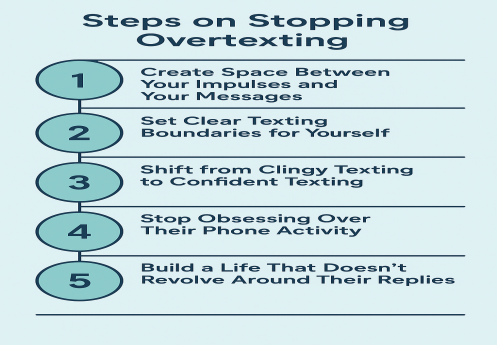
Steps on Stopping Overtexting
This section gives you a simple path from reactive texting to intentional, grounded communication.
Think of each step as a small adjustment in how you respond to your feelings before you touch your phone.
Step 1 – Create Space Between Your Impulses and Your Messages

This step helps you slow down the rush so you stop sending texts you regret.
The 5-minute pause rule before sending
When you feel the urge to send another text, pause for five minutes. Look at what you already sent and ask if a new message adds anything helpful or if it only tries to calm your nerves. Many “extra” texts disappear once the spike settles.
Using drafts instead of instant sending
Type your message, save it as a draft, and step away. With a little distance, you often shorten it, soften it, or delete it. Drafts give your emotions time to cool before they reach the other person.
Questions to ask yourself before you hit send
Before sending, ask: “Would I feel okay reading this tomorrow?” and “Does this sound steady or desperate?” Honest answers guide you toward cleaner, calmer messages..
Step 2 – Set Clear Texting Boundaries for Yourself

This step gives you personal rules so you don’t rely on mood swings to decide what you send.
Daily limits: how many texts are “too many”?
If your side of the chat looks crowded and theirs looks thin, the balance is off. Aim for fewer, more meaningful messages instead of constant pings, and let silence stand without patching it with extra lines.
Setting personal rules for double-texting and follow-ups
Decide your limits ahead of time. One follow-up after a fair gap is enough. If their replies stay short or delayed, you stop adding new messages to chase a reaction.
Matching their energy and pacing (without playing games)
Watch how they show up. If they are relaxed and occasional, you soften your volume. If they show warmth and effort, you meet it. You’re responding to real signals, not forcing a story.
Step 3 – Shift from Clingy Texting to Confident Texting

This step turns heavy, high-pressure texting into something lighter and more secure.
Short, clear, warm messages instead of life essays
Confident texts are easy to read. You say what you mean in one or two lines and trust it. Long paragraphs packed with nerves feel intense on a small screen and invite withdrawal.
Letting conversations breathe instead of forcing replies
Not every pause needs saving. Some chats end for the day, and that is fine. Giving space shows you have a life, respect theirs, and are not waiting on every buzz.
Using calls or in-person plans instead of text spirals
If a thread goes in circles, suggest a brief call or a simple plan. Real-time moments clear tension faster and stop long emotional back-and-forth loops in chat.
Examples: turning needy texts into secure, relaxed ones
Swap “Why are you ignoring me?” for “You might be busy, talk later.”
Swap “Do you still like me? You feel distant” for “I enjoy talking with you. If you’re still up for meeting, let me know.”
Same honesty, more stability.
Learning how to text funny is a great way to keep interactions light and playful without pressure.
Small gestures like sending a thoughtful good morning text can maintain a connection in a balanced way.
Similarly, a considerate goodnight text can end the day on a positive note without clinginess.
Step 4 – Stop Obsessing Over Their Phone Activity

This step cuts the habits that keep your anxiety running, so you text less from fear.
Why checking “last seen,” views, and likes makes anxiety worse
Watching online status, reads, and story views pushes your mind to invent problems. That pressure often leads straight back into overtexting and regret messages.
Practical ways to stop stalking their socials
Mute active status where you can, move their chat off the top of your screen, and limit how often you open their profile. Less monitoring means fewer triggers and calmer choices.
Protecting your mental health from digital overthinking
Treat your attention as something valuable. Avoid re-reading old chats to attack yourself, and take slow replies as information instead of a threat. If the pattern feels one-sided, adjust your effort instead of chasing harder.
Step 5 – Build a Life That Doesn’t Revolve Around Their Replies

This step helps you create a life that makes overtexting feel unnecessary.
Replacing compulsive texting with real routines and hobbies
Fill your time with things that matter to you: work, training, creative projects, learning, rest. When your day has weight, one unread message loses its power to wreck your mood.
Strengthening friendships and offline support systems
Spread your emotional load. Close friends, group chats, family, and local communities all help, so one person’s reply does not control your sense of safety.
How self-respect and independence naturally reduce overtexting
As you value your time more, you stop begging for attention, stop fixing silence with walls of text, and start letting people show their level of interest through action.
What “Overtexting” Really Is (And Why It’s a Problem)

This section clears up what overtexting actually means so you can see your patterns clearly.
Overtexting is less about how many texts you send and more about why you send them: testing, chasing, soothing fear, or filling every gap.
The difference between healthy communication and overtexting
Healthy texting feels shared and steady. Overtexting feels one-sided, rushed, and anxious, with one person carrying all the weight and trying to control the flow.
Signs you’re overtexting (that you might be ignoring)
Common signs include cringing at your own history, sending follow-ups too fast, explaining yourself over and over, or feeling sick when they have not answered yet.
How overtexting feels on their side
From their side, it can feel like pressure, guilt, and constant emotional management. Even if they care, that weight can turn interest into distance.
Patterns like over-checking, reassurance-seeking, and panic texting often overlap with anxious attachment and rejection sensitivity described in relationship psychology research.
How Overtexting Shows Up in Real Life
This section shows how these habits look day-to-day so you can catch them early.
Double-texting, triple-texting, and “paragraph dumping”
A second message can be reasonable. A pile of rapid-fire texts or long emotional blocks, sent without pause, comes across as panic and can push people away.
Replying instantly every time (and panicking at slow replies)
Quick replies are fine. The problem begins when you drop everything for their messages and fall apart if they do not do the same, which signals you value them more than your own time.
Overexplaining, over-apologizing, and chasing “clarity”
Constant “sorry,” “I didn’t mean it like that,” and “are you upset?” texts create tension even when nothing was wrong. One clear message often says enough.
Monitoring their online status, views, likes, and receipts
Building stories from tiny digital signals turns the connection into a scoreboard and fuels more anxious messaging, instead of calm, honest talk.
Healthy Texting Standards to Aim For

This section gives you a simple picture of what balanced texting looks like.
Respecting time, space, and emotional bandwidth
You treat their time, and your own, as limited. You give room for work, sleep, and life without guilt trips or “tests” when replies slow down.
Reciprocal effort and shared responsibility
You look for signals that they put in effort too: messages with some warmth, questions back, and initiative from their side. If that never appears, you step back instead of pushing.
Balancing texting with calls and in-person connection
Texting supports the connection, but real talks and shared experiences build it. You use chat as a bridge, not your only proof that something is real.
For helpful tips on how to call your crush without making it awkward or overwhelming, see
How to call crush.
Quick Reference: Overtexting vs. Healthy Interest
This section gives you a fast mental checklist you can carry with you.
Green flag texting habits
You can set your phone down, send honest messages without chasing, and handle pauses without spiraling. You feel like yourself in text, not a performer.
Yellow flag behaviors to watch
You keep checking if they opened your message, reread your texts in shame, or feel your chest tighten every time they take longer than you hoped. These are signals to slow down.
Red flag texting patterns that need a reset now
You send guilt-heavy lines, repeated “???” messages, long emotional rants, or ignore clear distance from their side. At that point, step back, breathe, and change the pattern.
Understanding Digital Companionship and Emotional Support
To better understand digital companionship and how it intersects with emotional needs, see our detailed explanation of What is an AI girlfriend.
If you’d like a low-pressure way to practice communication skills or feel less alone, you can explore our reviewed AI companion tools as one optional support at Best AI Girlfriends.
Conclusion
Overtexting grows from fear, not from caring too much. As you build space into your replies, set your own limits, match real effort, and fill your life with more than one chat thread, your messages start to feel lighter and more confident. The people who are right for you feel safer with that version of you, and you feel safer with yourself.
Disclaimer
This guide is for support and education, not a substitute for therapy. If texting anxiety is affecting your sleep, work, or mental health, consider speaking with a licensed mental health professional or a trusted support service.
FAQs
Is double-texting always overtexting?
Not automatically. A single follow-up after a fair gap can be normal and respectful. It turns into overtexting when you stack messages to chase reassurance, push for replies, or react to anxiety instead of giving the other person space.
How many texts are “too many”?
There’s no magic number. It’s “too many” when your side of the chat is doing all the work, you’re sending faster than they respond, or you feel relief only when you hit send. Focus on balance, pacing, and whether effort looks mutual.
How do I fix it if I’ve already overtexted?
You don’t need a big apology monologue. Slow down, stop adding more follow-ups, and let things breathe. If it feels right, one simple message like “Got a bit in my head earlier, all good now” can reset the tone more effectively than over-explaining.