



Calling someone can feel high-stakes, but it doesn’t have to be. The key is respect, clarity, and consent. This guide shows you how to make considerate, effective calls—from the first “hi” to the follow-up—so both people feel comfortable and heard.
If you prefer texting, you’ll still benefit from this: you’ll learn when a call is better than a text, how to ask for permission first, and what to say when the call starts so it feels natural. For additional texting tips that bring warmth and humor, explore How to Text Good Morning and How to Text Funny.
Key Takeaways
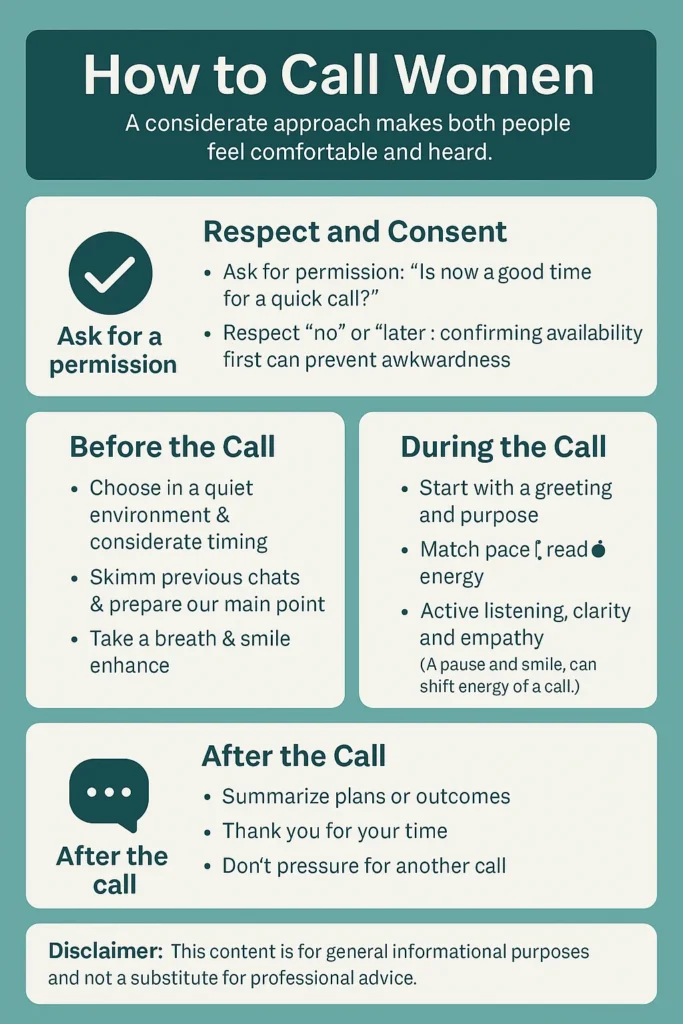
- Respect and consent come first. Always ask before calling, and let “no” or “later” be a comfortable answer.
- Timing and tone matter. Choose considerate hours, use a calm environment, and match her pace during the conversation.
- Preparation builds confidence. Review recent chats, plan your purpose in one sentence, and breathe before dialing.
- Good communication earns trust. Listen actively, speak clearly, and respect boundaries throughout the call.
- Follow up thoughtfully. Summarize any plans, send a short thank-you message, and never pressure for another call.
Quick Definition & Scope
A quick shared definition keeps expectations aligned.
What this guide covers: how to politely request, place, and handle personal, social, and professional calls with women in a way that’s adult, kind, and easy to accept or decline.
What “calling women” means in this guide
Calling = using voice (or video) to communicate in real time, with prior consent and a clear purpose.
Who this guide is for (18+ adults)
This is written for adults (18+). If you’re under 18, follow your local rules and a trusted adult’s guidance. Internationally, the UNICEF definition of a child (under 18) is widely used, though some jurisdictions set the majority age earlier.
When a call is appropriate vs. a text or DM
Use a call when tone matters, decisions are quicker by voice, or there’s a sensitive context. Use text/DM for low-stakes updates, scheduling windows, or to ask permission to call.
How AI Girlfriends Are Changing Relationships
Before diving into calling women, it’s helpful to understand the evolving nature of relationships today. Many people find companionship not only in human connections but also through digital companions known as What is an AI girlfriend.
An AI Girlfriend is a virtual companion powered by artificial intelligence, designed to simulate emotional and romantic connections. For those exploring new forms of interaction, platforms offering an AI Girlfriend provide communication alternatives that supplement traditional calls or texts.
Ground Rules: Consent, Respect, and Context

Set the foundation first so every call feels safe and low-pressure.
Confirming consent and preferred contact method
Before calling, ask first with a short message: “Is now a good time for a quick call?” Respect a no or later without pushing. In real conversations, I’ve found that confirming availability first prevents awkwardness and shows you value the other person’s time.
Age, boundaries, and privacy basics
Only call adults you have reason to contact. Keep privacy in mind—don’t put anyone on speaker or record without permission.
Power dynamics and professional boundaries
If there’s a power gap (e.g., manager/employee), be extra cautious. Keep it work-scoped, avoid off-hours unless invited, and document decisions in writing afterward.
Intent Matters: Know Why You’re Calling

Clarity reduces anxiety and makes the call efficient.
Clarifying your purpose (information, invite, check-in, support)
Know your one-sentence purpose: confirm plans, invite to something, check in, or offer support.
Setting a respectful outcome (yes/no is okay)
State outcomes as options, not expectations. A no or not now is valid.
Matching tone to relationship stage
Keep tone light and courteous for early stages; warm and familiar for established connections.
Timing & Logistics: When and How to Call

A little setup goes a long way.
Choosing a considerate time (time zones, schedule, culture)
Consider time zones, working hours, and cultural norms. When unsure, ask for a window that works for her.
Asking permission to call (message first)
Send a quick text first: “Free for a 5-minute call sometime today?” Suggest time ranges.
Caller ID, devices, and environment (quiet, safe, stable connection)
Use a traceable caller ID when possible. Find a quiet space and a stable connection to show respect for her time.
Preparing Before You Dial

Preparation keeps the call smooth and considerate.
Research and context (last convo, shared plans)
Skim your last messages or notes. Be ready with any details she might need.
A simple mini-outline (opening, purpose, close)
Think: Opening (greeting + consent), Purpose (1 sentence), Close (next step + thanks).
Managing nerves and mindset
Breathe, smile (it changes your tone), and treat the call as a two-way conversation—not a performance.
Opening the Call Smoothly
Start simple and respectful.
Greeting and identity (who you are and why you’re calling)
“Hi, it’s [Your Name]. Do you have a minute to talk about [topic]?”
Quick consent check to proceed
“If now’s not good, happy to text or call later.” Pause and listen.
Reading energy and pacing
Match her pace and energy. If she sounds rushed, keep it brief and offer to reschedule.
Building Rapport and Trust

Trust is built with tone, listening, and boundaries. Understanding these emotional dynamics is especially important when feelings of loneliness come into play. For deeper insight into feelings of loneliness and emotional well-being, see Single and Lonely.
Active listening and turn-taking
Let her finish. Use short acknowledgments: “Got it,” “Makes sense,” “Thank you.”
Tone, clarity, and empathy
Be clear, kind, and avoid slang that could be misread. If it’s sensitive, speak with empathy.
Respecting boundaries and signs of discomfort
If she sounds hesitant, offer an out: “We can pause here if you prefer to message.”
Getting to the Point (Without Pressure)
Clarity helps everyone relax.
Framing the purpose in one sentence
“Quick call to confirm Saturday at 3 PM, still good?”
Asking clear, easy-to-answer questions
Prefer yes/no or either/or questions to reduce friction.
Offering options and flexibility
Provide two or three reasonable choices and accept her preference.
Invites and Plans (Romantic or Social)

Keep it specific, light, and low-pressure.
Asking for a date or a meetup respectfully
“I’ve enjoyed talking with you. Would you like to grab coffee this weekend?”
Suggesting specific times without steamrolling
Offer one or two time options, then invite alternatives.
Handling “no,” “not now,” or “maybe” gracefully
Thank her for being clear. No pressure. If “maybe,” suggest checking in later via text.
Professional & Networking Calls
Business calls should be predictable and concise.
Setting agendas and expectations
Message in advance: agenda + duration (e.g., “15 minutes”).
Keeping it brief and outcome-oriented
Stick to one outcome per call. Summarize decisions before hanging up.
Follow-ups and next steps
Send a short recap email or message with any dates, owners, and deliverables.
Sensitive or Difficult Calls
Lead with care and accountability.
Apologies and accountability
Apologize once, be specific, and state steps to fix. Don’t demand reassurance.
Support check-ins (well-being, tough times)
Ask permission: “Is it okay if I check in?” Offer practical support and avoid pushing for details.
De-escalation and pausing when needed
If emotions rise, slow down, name the need to pause, and offer to resume later.
If There’s No Answer

Respectful persistence beats spammy tactics.
Voicemail etiquette (short, clear, consent-friendly)
Wait 30–45 seconds. Leave your name, purpose, one action, and how to opt out.
When to send a follow-up text instead
If you didn’t leave a voicemail—or even if you did—send a brief text with the same purpose.
Reasonable retry timing and when to stop
If no reply, wait at least a day. After two attempts (call + text), stop unless invited to try again.
After-Call Etiquette
Clarity after the call builds trust.
Recapping agreements or details
Send a one-paragraph recap with times, locations, or links.
Thank you, and confirmation messages
A quick thank you signals appreciation and closes the loop.
Respectful follow-up cadence
Match her pace. For social calls, follow up once unless invited to continue.
Common Mistakes to Avoid

A few pitfalls can undo good intentions.
Over-texting or over-calling
Don’t stack calls or messages. Give space.
Talking over her or ignoring cues
Let pauses happen. Ask, “Does that work for you?”
Negging, pressure tactics, or manipulation
Never use tactics that undermine autonomy or confidence.
Safety, Privacy, and Ethics
Ethics protect both people.
Harassment, block signals, and do-not-call requests
If asked not to call, stop. Blocking or silence is a boundary.
Sharing or recording calls (consent and legality)
Recording or sharing requires clear consent and may have legal implications.
Protecting personal information
Avoid sharing private details about her or your call.
Conclusion
Calling well comes down to consent, clarity, and care. Ask permission first, state your purpose in one sentence, and keep the conversation easy to accept or decline. When in doubt, send a quick message to align on timing and preference.
Treat every call as a two-way conversation. Listen more than you speak, match her pace, and leave space for a yes, a no, or a later—without pressure. If she prefers text, adapt gracefully and keep things respectful and direct.
Over time, consistency builds trust. Recap decisions, follow up when you said you would, and protect privacy. With these habits, your calls feel thoughtful, low-pressure, and genuinely welcome.
Disclaimer
This guide offers general communication and etiquette tips based on real-world experience. It is not a substitute for professional relationship, legal, or psychological advice. Always respect local laws, cultural differences, and personal boundaries when initiating or recording calls.
FAQs
Frequently Asked Questions
How often is too often to call?
Match her pace. If you’re new, 1–2 calls per week max unless she invites more. After a missed call, wait 24–48 hours before trying again.
What if she never picks up?
Leave one brief voicemail or text, offer two time options, and stop after two total attempts. Let her reach out when she’s ready.
Is it okay to call without texting first?
Usually no. Text first to ask permission. Exceptions: urgent matters or established relationships where calling first is explicitly okay.
When is a video call appropriate?
When there’s mutual comfort and consent, ask first, schedule a time, and keep it optional: “Happy to do video if you are—audio is fine too.”


