
Asking someone out means clearly inviting them to meet at a specific time and place in a way that is respectful, low-pressure, and easy to accept or decline.
Asking someone out can feel intimidating, but it doesn’t have to be. A simple, genuine approach is often more powerful than a perfect line. When you focus on clarity, respect, and a natural tone, you make the moment less stressful for both of you.
This guide walks you through how to ask someone out step by step — from building confidence to handling any response gracefully.
Key Takeaways
- Confidence matters more than perfect words. A clear, kind, and relaxed ask makes the moment less intimidating for both people.
- Light conversation builds comfort. A warm, casual tone sets the stage for a natural and easy invitation.
- Being specific shows intention. Suggesting a simple, clear plan avoids confusion and makes it easier for the other person to respond.
- Rejection isn’t failure. Handling any response with grace shows maturity and self-assurance.
- Practice makes you better. Every ask builds your confidence and makes future conversations feel less stressful.
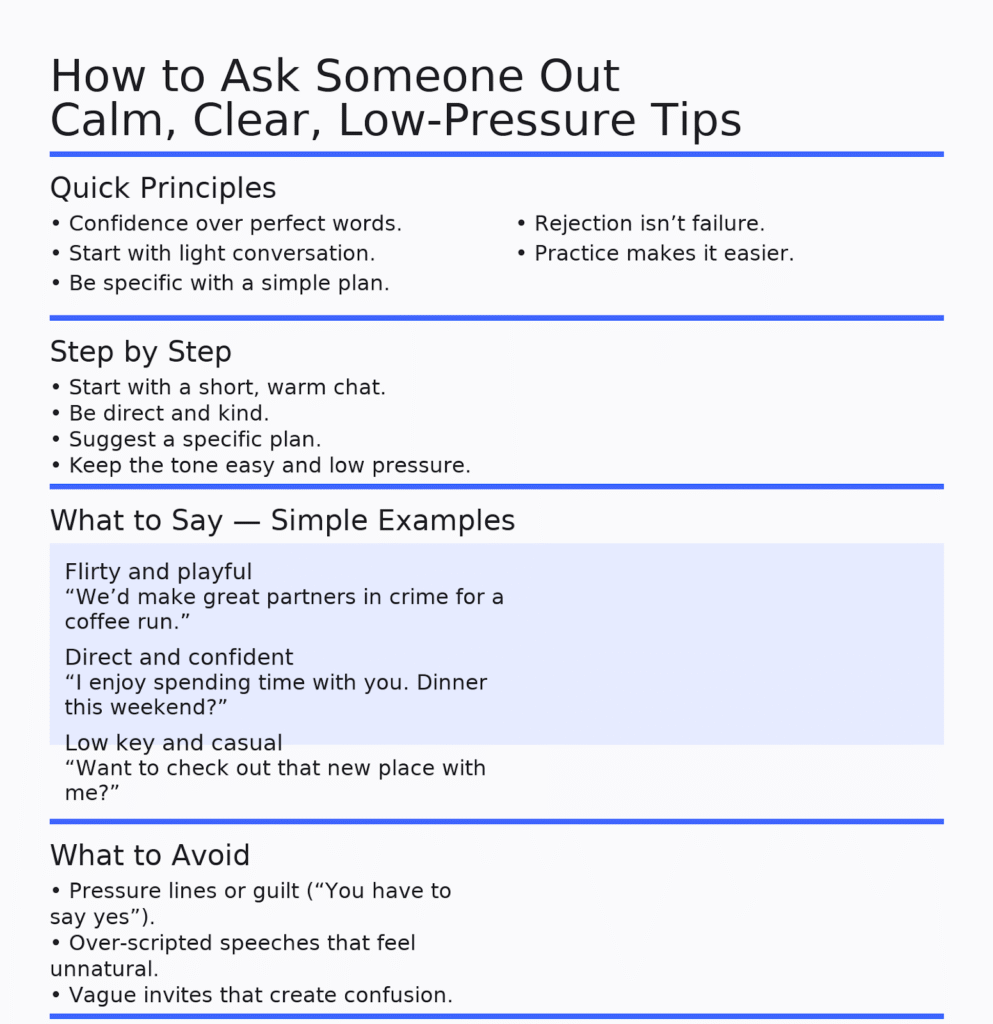
How to Ask Someone Out (Step-by-Step)
Before you ask someone out, it helps to know how to keep things light and clear. A calm, easy approach sets the tone for a more comfortable conversation.
Start with light conversation
A short, casual chat helps break the ice and build ease between you. It’s less about clever lines and more about creating a natural moment. Keeping communication warm and casual, like knowing how to text good morning, helps maintain interest and sets a positive tone before asking someone out.
Be direct but kind
A clear, polite question leaves little room for awkwardness. People appreciate honesty more than overcomplication.
Suggest a specific plan (not vague invites)
Being specific gives them something real to respond to. It shows intention without creating pressure.
Keep it casual and low pressure
An invitation shouldn’t feel like a performance. A relaxed tone helps them feel free to say yes or no comfortably.
Why Asking Someone Out Feels So Intimidating

It’s normal to feel nervous before asking someone out. Much of that fear comes from internal pressure rather than reality.
The psychology behind fear of rejection
Rejection activates emotional discomfort, which can make the ask feel bigger than it is. Understanding this helps you separate fear from fact.
Cultural and social pressures
The media often exaggerates what asking out should look like, but real-life moments are usually simple and human.
Why confidence matters more than perfection
Confidence doesn’t mean having perfect words. It’s about being comfortable enough to show honest interest.
Preparing Yourself Before You Ask

I once suggested a simple ask to a client: “Coffee at Greenleaf after work this Thursday at 5 pm?” She replied, “Thank you for asking. I am not available for dates.” He thanked her, wished her well, and moved on. He felt calmer because the clear invitation created a clean answer and no pressure.
Preparation can ease your nerves and make the ask feel more natural. The goal is to feel steady, not rehearsed.
- Knowing what you want (clarity over pressure)
When you know what kind of connection you’re looking for, you communicate more calmly and clearly.
- Reading the signs of interest
Paying attention to how they engage with you helps you decide when it’s the right time to ask.
- Choosing the right moment and setting
A relaxed environment makes everything smoother. Timing can make the difference between awkward and easy.
- Building confidence through small interactions
Confidence grows from brief, genuine exchanges. A friendly smile or short chat builds trust before the actual ask.
Ways to Ask Out Depending on the Situation

Not every situation is the same. How you ask can shift depending on the context.
Asking someone out in person
Face-to-face is the most direct and sincere. Keep it short, warm, and natural.
Asking someone out over text
Texting can be a comfortable option. A friendly, simple message is often enough.
Asking a friend you like
Honesty matters most when friendship is already there. A soft, open approach works best.
Asking out someone you met online
Moving from chatting to meeting in person is easier when the invite is clear and respectful.
Asking someone out at work or school (with respect and boundaries)
Be mindful of professional or social dynamics. Make sure they feel no pressure to say yes.
What to Say When You Ask
What you say doesn’t have to be perfect. The key is clarity, respect, and warmth. The goal isn’t to impress with fancy lines but to create a natural moment that makes the other person feel at ease.
Flirty and playful lines
A light, playful tone can help break the tension and make the interaction enjoyable. This works best when there’s already some friendly chemistry between you. You can lean into humor or gentle teasing, as long as it feels natural.
For example, you might say something like, “I think we’d make great partners in crime for a coffee run,” or “I’m officially asking you out — no pressure, but I do have excellent taste in cafés.”
The key is to keep it light, fun, and not over the top, so the other person feels comfortable smiling and responding honestly.
A playful approach can include learning how to text funny to create enjoyable interactions that make your invitation feel lighthearted.
Direct and confident lines
Being direct shows respect for their time and your own feelings. It removes confusion and makes your intentions clear, which many people actually appreciate.
Something as simple as “I really enjoy spending time with you — would you like to go out for dinner?” communicates both interest and confidence.
You don’t need to make it sound like a movie scene. Clarity builds trust, and trust makes the moment easier for both of you.
Low-key and casual approaches
Not every ask has to sound like a “big moment.” Sometimes, an easy, everyday tone works best — especially if you want to keep things comfortable and pressure-free.
You could say, “Hey, would you want to grab a coffee later this week?” or “I was thinking of checking out that new place — want to come with me?”
This kind of approach takes the pressure off the other person, making it feel more like an open invitation than a dramatic confession.
What to avoid saying
Avoid anything that sounds overly rehearsed, manipulative, or unclear. Overly scripted lines can make the conversation feel unnatural, and anything that corners the other person into saying yes creates discomfort.
Phrases like “You have to say yes” or “I’ll be so sad if you don’t” should be avoided — they remove their freedom to choose, which isn’t respectful.
A good ask respects their boundaries, gives them room to respond honestly, and leaves both of you feeling good about the interaction.
How to Handle Their Response Gracefully

No matter the outcome, how you respond says a lot about your confidence and respect.
If they say yes, next steps
Confirm your plan and keep the energy light. A yes is just the start, not the finish line.
If they say maybe, reading the situation
A maybe may mean hesitation or politeness. Read their tone and give them space.
If they say no — handling rejection with confidence
A no isn’t personal failure. Thank them, smile, and carry on without resentment.
When to move on vs. try again later
If it’s a clear no, respect it fully. If it’s hesitation but warmth, giving it time might be fine.
Common Mistakes to Avoid When Asking Someone Out

Most awkward asks come from overthinking. Keeping things simple reduces pressure for both of you.
Overthinking every word
Clarity beats cleverness. Say it simply.
Making it too high-stakes
Remember: it’s one moment, not your whole story.
Ignoring nonverbal cues
Pay attention to body language and tone to know when to proceed or pause.
Pushing for a yes
A respectful ask always leaves space for no.
How Timing and Context Affect Your Chances
When and where you ask matters almost as much as what you say. A comfortable moment sets a better stage.
Understanding comfort zones
A relaxed setting increases the chance of a positive response.
Avoiding awkward or pressured moments
Bad timing can create discomfort even when interest exists.
Choosing an environment where both feel safe
A neutral, open space gives both of you more room to breathe.
What Happens After You Ask

The conversation doesn’t end with the ask. How you follow up shapes the next step.
Following up naturally
A short, friendly follow-up keeps things easy and comfortable.
Planning a comfortable first date
Simple plans make for relaxed, genuine moments.
Keeping momentum without pressure
Let the connection build at its own pace without forcing anything.
Embracing AI Companionship in Modern Dating
As you build confidence in asking someone out, it’s interesting to also consider new forms of companionship. Understanding what is an AI girlfriend can open your perspective on different kinds of meaningful connections.
For those curious about digital companionship, an AI Girlfriend may offer unique experiences alongside traditional dating.
Final Thoughts: Rejection Isn’t the End
Asking someone out is an act of courage, not a test of worth. A no is not failure — it’s a sign you took a chance.
Why courage matters more than outcome
The bravery to ask matters more than the result.
How each “ask” makes you better
Every moment like this builds your confidence for the next.
Shifting from fear to opportunity
Asking someone out isn’t about avoiding rejection. It’s about opening a door that might just lead somewhere meaningful.
Disclaimer
This guide is for general education. Always respect consent and boundaries. Follow workplace or school policies. If someone is not interested, stop and do not ask again.
Frequently Asked Questions
How can I ask someone out without feeling nervous?
Focus on being genuine and keep it simple. Small chats and clarity ease nerves.
What if they say no or maybe?
Respect their answer. A no is okay—thank them and move on. Maybe means give it some time.
How do I keep my invite casual but interesting?
Use friendly, specific ideas like “coffee later?” to make it low-pressure but clear.